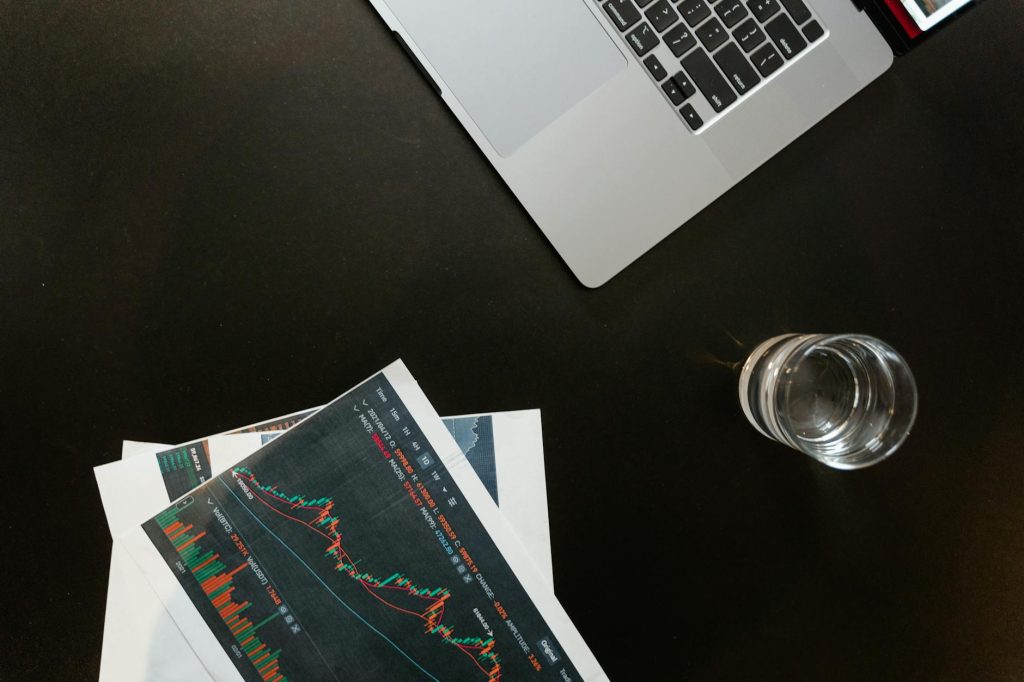

Trading crypto can feel like stumbling into a dark room. You’ve got a hunch, maybe some insider tips, and a whole lot of market noise. But how do you actually *see* what’s going on? That’s where technical analysis (TA) comes in, giving you a flashlight to navigate the crypto jungle. Forget the fortune tellers and the crypto gurus promising Lambos. TA is about looking at price action, volume, and indicators to make informed decisions. It’s about reading the tea leaves… or, you know, the candlestick charts.
What Is Technical Analysis?
Simply put, technical analysis is the study of past market data, primarily price and volume, to predict future price movements. It’s based on the idea that history tends to repeat itself. Traders use various tools and techniques to identify patterns, trends, and potential trading opportunities. It’s like being a detective, except instead of solving a crime, you’re trying to crack the code of the market. And believe me, the market can be a criminal.
Unlike fundamental analysis, which focuses on the underlying value of an asset (like a company’s financials for stocks), TA focuses purely on the price chart. This makes it particularly relevant in crypto, where projects are often new, and their fundamentals might not be fully established or easily understood. You can think of it as using the *behavior* of traders to understand their *beliefs* and *motivations*. This method, while not a guarantee of future profits, helps identify potential trading opportunities with the help of probability, and risk management.
The Basic Tools: Charts, Trends, and Support/Resistance
Okay, let’s get down to brass tacks. The heart of TA is the price chart. And trust me, it’s not as intimidating as it looks. Here are a few essential concepts:
- Candlestick Charts: These are the most common charts. Each candlestick represents price movement over a specific time period (e.g., 1 hour, 1 day). The body of the candle shows the opening and closing prices. The wicks (the lines above and below the body) show the highest and lowest prices during that period. Green candles indicate a price increase, red indicate a decrease. Learn the patterns (doji, hammer, engulfing) and get a feel for the market, and you’re off to a good start.
- Trend Lines: These are straight lines drawn on the chart to identify the direction of the price movement. An uptrend is a series of higher highs and higher lows. A downtrend is a series of lower highs and lower lows. Identifying the trend is crucial. Trade *with* the trend, not against it. Remember this and your life will be better.
- Support and Resistance Levels: These are price levels where the price tends to struggle to go above (resistance) or below (support). Think of them as invisible barriers. Traders often place buy orders near support levels (expecting the price to bounce) and sell orders near resistance levels (expecting the price to fall). Understanding these levels is key to managing risk, and knowing when to enter, exit, or simply do nothing.
The more you understand these basic tools, the more you will be able to see the trends and patterns. You’ll be able to identify key levels of support and resistance. And then, you can start building a plan to take advantage of the patterns you notice.
Indicators: Your Secret Weapons
Once you’ve got a handle on the basics, you can move on to indicators. These are mathematical calculations based on price and volume data that can help you identify trends, momentum, and potential trading signals. They’re like your secret weapons in the crypto war. Here are a few of the most popular:
- Moving Averages (MAs): These smooth out price data to help you identify the trend. The most common are the Simple Moving Average (SMA) and the Exponential Moving Average (EMA). When a short-term MA crosses above a long-term MA, it’s often seen as a bullish signal (buy). Conversely, when a short-term MA crosses below a long-term MA, it’s a bearish signal (sell).
- Relative Strength Index (RSI): This is a momentum indicator that measures the magnitude of recent price changes to evaluate overbought or oversold conditions in the price of a crypto asset. An RSI reading above 70 is often considered overbought (potential for a pullback), while a reading below 30 is considered oversold (potential for a bounce).
- Moving Average Convergence Divergence (MACD): This is a trend-following momentum indicator that shows the relationship between two moving averages of a security’s price. It helps to identify potential buy and sell signals. Crossovers of the MACD line with the signal line can indicate potential trend changes.
There are many other indicators, but these are a great starting point. The trick is to experiment and find the ones that work best for your trading style and the crypto you’re trading. Remember that no indicator is perfect, and it’s best to use them in combination.
Putting It All Together: Strategies and Risk Management
So, you’ve got the tools and you’re ready to make a trade? Hold your horses. You also need a strategy. Here are a few common approaches:
- Trend Following: Identify the trend (uptrend or downtrend) and trade in the direction of the trend. Buy on pullbacks in an uptrend, and sell on rallies in a downtrend.
- Breakout Trading: Look for price breakouts above resistance levels (buy) or below support levels (sell). This is about identifying when a coin breaks out of a price pattern.
- Range Trading: Identify a price range and trade within it. Buy near support and sell near resistance.
However, the most important aspect of TA is risk management. Always use stop-loss orders to limit your potential losses. Never risk more than you can afford to lose. Determine your risk tolerance and stick to your trading plan. It’s a game of probabilities. Investopedia, for example, has some great introductory guides to risk management in trading.
Keeping It Real: The Limits of TA
Now, let’s get real. Technical analysis isn’t a magic bullet. It’s not about predicting the future with 100% accuracy. The market is influenced by a lot of factors, including news, regulations, and overall sentiment. No single tool or indicator is guaranteed to be correct. Also, sometimes things just don’t make sense, even to the most seasoned TA expert.
Moreover, cryptocurrency markets can be highly volatile, with rapid price swings that can make TA more challenging. So, don’t put all your eggs in one basket. Combine TA with other forms of analysis, and always stay informed about the latest developments in the crypto space. It’s a marathon, not a sprint.
Remember that TA is not a replacement for thorough research. If you just want to get rich quick in crypto, you’re better off heading to the casino. TA should be used alongside other forms of analysis to make informed trading decisions. It’s an additional tool that can make you a more well-rounded trader. It can also help you understand some of the underlying forces driving market trends.
The Bottom Line: TA for the Long Haul
Technical analysis is a valuable skill for any crypto trader. It provides a structured framework for analyzing price action, identifying opportunities, and managing risk. Start with the basics, learn the tools, and practice. The more you study the charts and watch the market, the better you’ll become at spotting patterns and making profitable trades. Think of it as a skill to be honed over time, like the perfect pour of a pint. And, just like that perfect pint, there are some days you just need to crack open a Death Metal Mug and contemplate the market.
If you’re really committed to learning TA, you could check out the resources provided by the Securities and Exchange Commission (SEC). They have tons of information to help any beginner.
And if all this crypto talk has you parched, or if you just need something to sip on while you monitor the charts, there’s no shame in grabbing yourself a **mens coffee mugs** and getting your caffeine fix. Trading is a long game, and we’re here for the long haul.